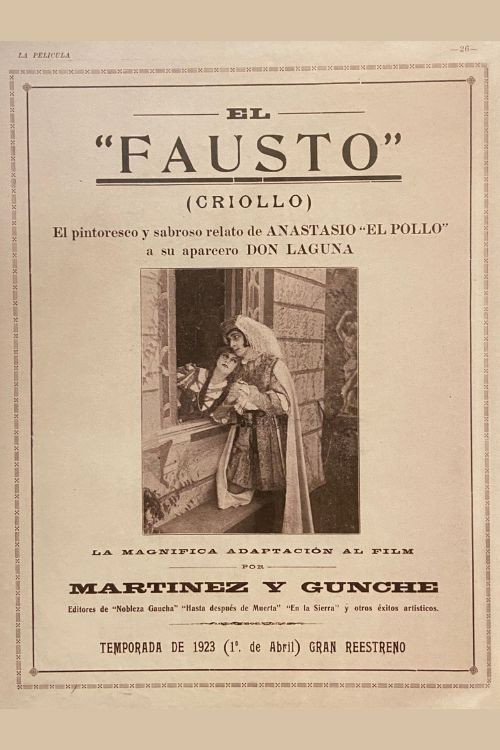
Fausto 1923
Step into the world of Argentine cinema with Fausto (1923), a captivating comedy that brings to life the timeless poem by Estanislao del Campo. Directed by Enrique Ernesto Gunche, this silent film masterfully weaves a tale that is both humorous and poignant.
Director: Enrique Ernesto Gunche
Frequently Asked Questions
What is Fausto (1923) about?
Fausto (1923) brings to life the poem by Estanislao del Campo, weaving a tale that is both humorous and poignant, set against the rich cultural heritage of early Argentine cinema.
Who directed Fausto?
Enrique Ernesto Gunche directed Fausto (1923), a silent film that showcases his mastery of comedic storytelling.
Who stars in Fausto?
Unfortunately, the cast of Fausto (1923) remains a mystery.
Is Fausto (1923) worth watching?
While Fausto (1923) may not have an IMDb rating, its unique blend of humor and pathos makes it a standout in the world of silent films, making it a must-watch for those interested in early Argentine cinema.
How long is Fausto?
Unfortunately, runtime details for Fausto (1923) are not listed.
About Fausto (1923) — A Timeless Comedy from Argentine Cinema
Step into the world of Argentine cinema with Fausto (1923), a captivating comedy that brings to life the timeless poem by Estanislao del Campo. Directed by Enrique Ernesto Gunche, this silent film masterfully weaves a tale that is both humorous and poignant. With its rich cultural heritage and engaging storyline, Fausto (1923) is a must-watch for those interested in exploring the early days of Argentine filmmaking.
While the cast of Fausto (1923) remains a mystery, the film's ability to transport viewers to a bygone era is undeniable. The use of comedic elements and the exploration of themes that continue to resonate with audiences today make Fausto (1923) a standout in the world of silent films. As you delve into the world of this early Argentine classic, you'll find yourself immersed in a rich tapestry of laughter and tears.
Fausto (1923) may be a relic of the past, but its influence can still be felt today. With its unique blend of humor and pathos, this film is a testament to the power of storytelling and the enduring appeal of the silver screen.