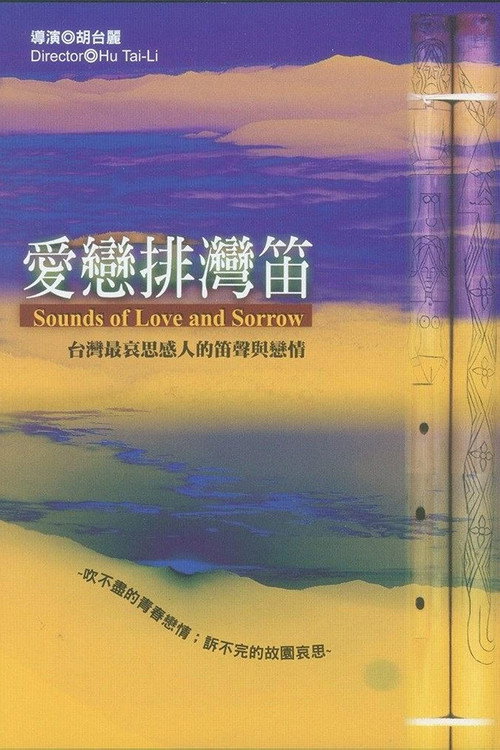
Sounds of Love and Sorrow 2000
Dive into the haunting melodies of *Sounds of Love and Sorrow (2000)* as director Hu Tai-Li crafts a mesmerizing documentary weaving together the haunting sounds of Paiwan flutes—including the legendary nose flute tied to ancient lore—with the poignant memories of tribal elders.
Director: Hu Tai-Li
Frequently Asked Questions
What is Sounds of Love and Sorrow (2000) about?
*Sounds of Love and Sorrow (2000)* transports viewers to the heart of Paiwan tribal life in Taiwan, where the eerie sounds of traditional flutes—especially the nose flute, linked to local legends—mingle with the voices of elders reminiscing about love, youth, and the tribe's origins. The film captures both the beauty of their customs and the sorrow of witnessing their gradual erosion under external pressures.
Who directed Sounds of Love and Sorrow?
*Sounds of Love and Sorrow* was directed by the acclaimed Taiwanese filmmaker Hu Tai-Li, known for her sensitive and immersive ethnographic documentaries.
Who stars in Sounds of Love and Sorrow?
As a documentary, *Sounds of Love and Sorrow (2000)* features interviews with Paiwan tribal elders and cultural figures rather than traditional actors.
Is Sounds of Love and Sorrow (2000) worth watching?
*Sounds of Love and Sorrow (2000)* is a hidden gem for fans of ethnographic cinema and those curious about Taiwan's indigenous cultures. While not widely rated, its poetic blend of music and oral history offers a unique and thought-provoking experience for patient viewers seeking something beyond mainstream narratives.
How long is Sounds of Love and Sorrow?
The runtime for *Sounds of Love and Sorrow (2000)* is 86 minutes.
About Sounds of Love and Sorrow (2000) — A Documentary of Music, Memory, and the Paiwan People's Legacy
Dive into the haunting melodies of *Sounds of Love and Sorrow (2000)* as director Hu Tai-Li crafts a mesmerizing documentary weaving together the haunting sounds of Paiwan flutes—including the legendary nose flute tied to ancient lore—with the poignant memories of tribal elders. This evocative film immerses viewers in the fading traditions of the Paiwan people in Taiwan, blending romantic recollections, creation myths, and laments for a way of life lost to the encroaching forces of modernity. Through these intertwined narratives, the documentary paints a vivid portrait of cultural resilience and the bittersweet beauty of a world on the brink of disappearance.
With its atmospheric blend of music and oral history, *Sounds of Love and Sorrow (2000)* offers a deeply moving exploration of identity, heritage, and the unyielding spirit of a community clinging to its roots. The film's meditative pace and rich cultural tapestry create an experience that lingers long after the final note fades, making it a must-watch for lovers of ethnographic cinema and those seeking a deeper understanding of Taiwan's indigenous soul.