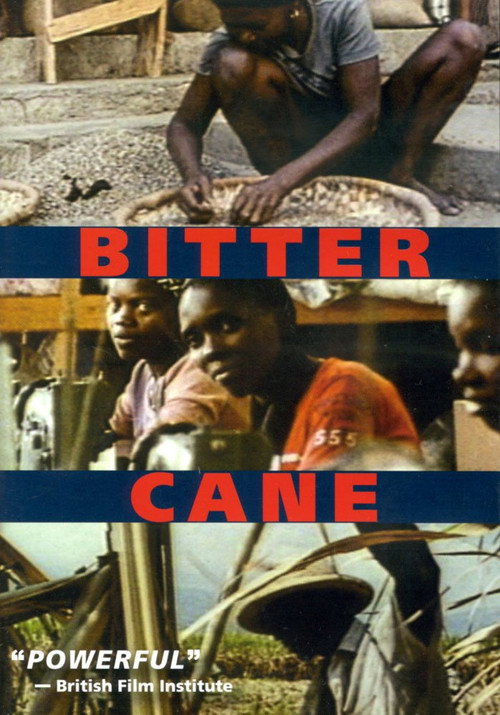
Bitter Cane 1983
Jacques Arcelin's gripping documentary *Bitter Cane (1983)* immerses viewers in six years of clandestine filming under Haiti's oppressive Duvalier regime.
Director: Jacques Arcelin
Frequently Asked Questions
What is Bitter Cane (1983) about?
*Bitter Cane* peels back the layers of Haiti's political and economic turmoil, tracing the exploitation of its people under the Duvalier dictatorship. It journeys from the coffee-rich highlands to Port-au-Prince's oppressive sweatshops, offering a stark look at foreign domination and local resistance.
Who directed Bitter Cane?
*Bitter Cane* was directed by Jacques Arcelin, a filmmaker whose clandestine work under Haiti's dictatorship brought this harrowing story to light.
Who stars in Bitter Cane?
Cast details for *Bitter Cane (1983)* are not publicly listed, reflecting its documentary style focused on real-life stories rather than named performers.
Is Bitter Cane (1983) worth watching?
As a documentary that exposes political and economic injustice with rare authenticity, *Bitter Cane* stands out for its historical weight and unflinching honesty. While it's unrated, its themes and clandestine origins make it a compelling watch for those interested in global inequalities and documentary filmmaking.
How long is Bitter Cane?
*Bitter Cane* runs for 75 minutes, a tight runtime that keeps the momentum sharp as it navigates Haiti's harsh realities.
About Bitter Cane (1983) — The documentary that uncovered Haiti's hidden suffering under Duvalier
Jacques Arcelin's gripping documentary *Bitter Cane (1983)* immerses viewers in six years of clandestine filming under Haiti's oppressive Duvalier regime. The film strips away layers of political and economic exploitation to reveal the raw struggles of Haitian lives, from the misty coffee farms clinging to rugged mountains to the sweltering, US-owned sweatshops pulsing in Port-au-Prince. Arcelin's lens captures a nation caught between foreign domination and its own resilient spirit, weaving a haunting portrait of resistance and hardship that feels as urgent today as it did four decades ago.
A raw, unflinching chronicle of economic injustice, *Bitter Cane* doesn't just document history—it exposes the machinery of inequality. Through stark visuals and unscripted encounters, the documentary forces audiences to confront the human cost of neocolonialism, foreign intervention, and systemic oppression. Arcelin's clandestine work transforms this into more than a film; it's a testament to the power of truth in the face of tyranny.