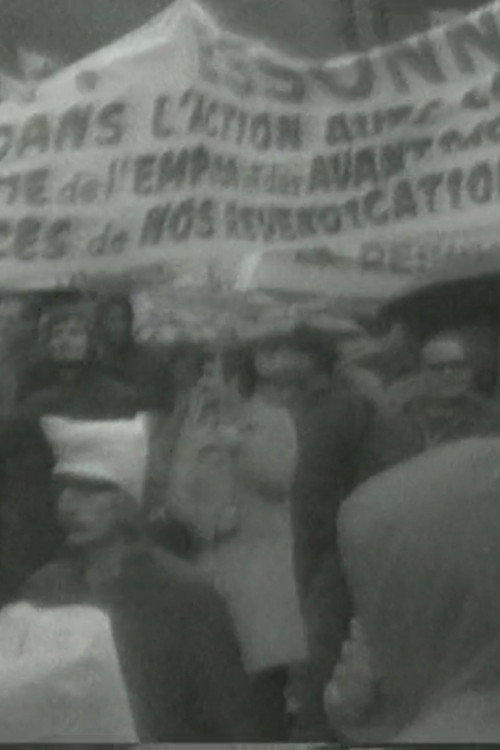
La marche de Besançon - LIP II 1973
Immerse yourself in the gripping 1973 documentary *La marche de Besançon - LIP II*, directed by visionary filmmaker Carole Roussopoulos.
Director: Carole Roussopoulos
Frequently Asked Questions
What is La marche de Besançon - LIP II (1973) about?
This 25-minute documentary documents a solidarity march in support of striking workers at the Lip factory in September 1973. It highlights the workers' action committees and their relationship with union structures, blending scenes of the march with meetings where crucial decisions were made.
Who directed La marche de Besançon - LIP II?
The film was directed by Carole Roussopoulos, a pioneering French filmmaker known for her work in feminist and activist cinema.
Who stars in La marche de Besançon - LIP II?
The documentary prominently features strike leader Charles Piaget alongside workers from the Lip factory, whose voices drive the narrative of resistance and solidarity.
Is La marche de Besançon - LIP II (1973) worth watching?
While unrated, this historic short film offers a unique window into 1970s labor movements and feminist activism. Its concise runtime and authentic focus make it a compelling watch for history and documentary enthusiasts.
How long is La marche de Besançon - LIP II?
The runtime is 25 minutes.
About La marche de Besançon - LIP II (1973) — A 1973 documentary on worker solidarity and the Lip factory strike
Immerse yourself in the gripping 1973 documentary *La marche de Besançon - LIP II*, directed by visionary filmmaker Carole Roussopoulos. This powerful short film captures the raw spirit of worker solidarity during the iconic 1973 Lip factory strike in France, where employees took bold action to save their jobs. Through intimate interviews with strike leader Charles Piaget and other workers, the documentary reveals the inner workings of their grassroots action committees and their tense negotiations with union hierarchies.
The atmosphere is electric, blending cinematic snapshots of the solidarity march winding through Besançon with candid footage from heated general assemblies. Roussopoulos masterfully contrasts the determination of the workers with the bureaucratic resistance they faced, creating a time capsule of defiance that still resonates today. A vital piece of labor history and feminist cinema, this 25-minute film isn't just a record—it's a rallying cry for collective action.