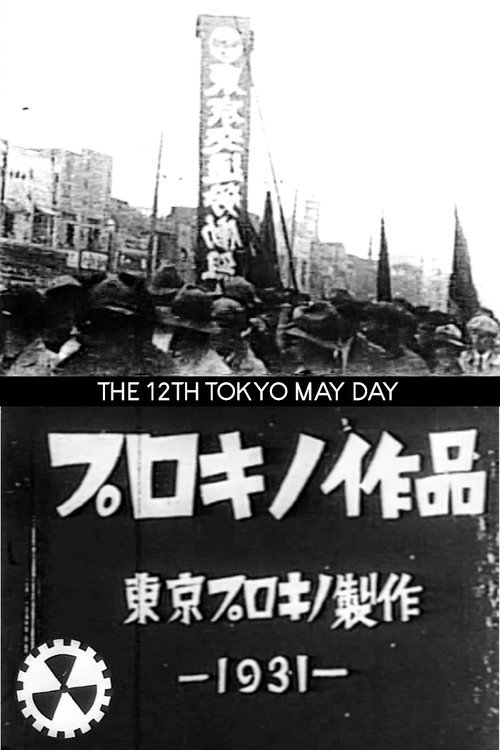
The 12th Tokyo May Day 1931
Dive into the raw, unfiltered energy of early 20th-century labor history with *The 12th Tokyo May Day (1931)*, a rare six-minute documentary capturing Japan's growing workers' movement.
Director: Sozo Okada
Frequently Asked Questions
What is The 12th Tokyo May Day (1931) about?
This short documentary captures the 1931 May Day celebrations in Tokyo, where workers gathered in parks to march, demonstrate, and demand fair labor conditions. It reflects the global tradition of May Day, rooted in the 1886 U.S. eight-hour workday strike, and offers a glimpse into Japan's labor movement during the early 20th century.
Who directed The 12th Tokyo May Day?
The film was directed by Sozo Okada, a notable figure in early Japanese cinema whose work often focused on social issues.
Who stars in The 12th Tokyo May Day?
Cast information for this documentary is not available.
Is The 12th Tokyo May Day (1931) worth watching?
While this six-minute documentary is more of a historical artifact than a narrative film, its rarity and historical significance make it a compelling watch for those interested in labor history or early Japanese cinema. Its brevity and authenticity offer a unique perspective on a pivotal era.
How long is The 12th Tokyo May Day?
The runtime for The 12th Tokyo May Day (1931) is 6 minutes.
About The 12th Tokyo May Day (1931) — Witness Japan's Workers' Rights History in a Rare Six-Minute Film
Dive into the raw, unfiltered energy of early 20th-century labor history with *The 12th Tokyo May Day (1931)*, a rare six-minute documentary capturing Japan's growing workers' movement. Directed by Sozo Okada, this slice-of-life historical film documents the vibrant May Day celebrations of 1931, when unions across Japan took to the streets to demand fair working conditions and shorter hours. The surviving footage transports viewers to a time of social upheaval, where the spirit of solidarity pulses through parades and speeches in city parks. Though only the first part remains, this fragment offers a glimpse into Japan's labor struggles, framed by the global May Day tradition born from the 1886 U.S. eight-hour workday strike. The film's gritty, documentary style contrasts sharply with its idealistic themes, making it a poignant artifact of pre-war activism.
As one of the few surviving records from Prokino's annual May Day recordings, *The 12th Tokyo May Day (1931)* stands as a testament to early Japanese labor cinema. Its historical significance outweighs its brevity, offering both historians and cinephiles a window into the era's collective spirit. While the full march isn't preserved, the surviving footage is a call to remember workers' rights and the power of unified action. Whether you're a history buff or a documentary enthusiast, this short film is a compelling piece of early social cinema worth discovering.