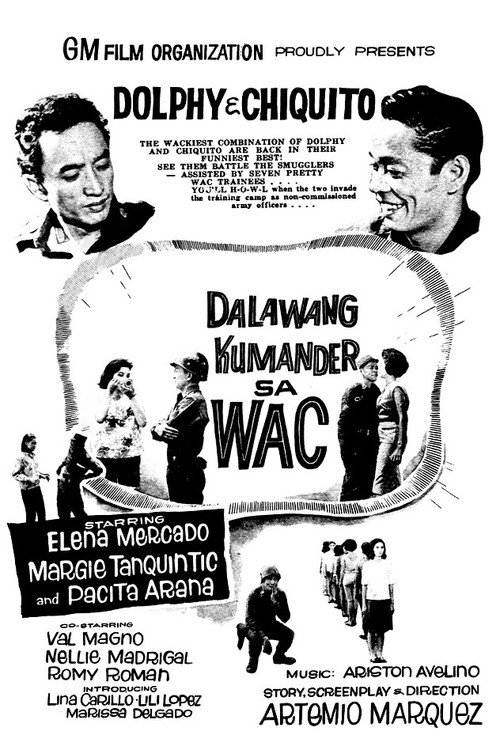
Dalawang Kumander sa WAC 1966
In the vibrant landscape of 1960s Philippine cinema, *Dalawang Kumander sa WAC* (1966) delivers a comedic escape with Dolphy and Chiquito leading the charge.
Director: Artemio Marquez
Cast

Frequently Asked Questions
What is Dalawang Kumander sa WAC (1966) about?
This 1960s Filipino comedy follows two bumbling recruits as they wreak havoc in the Women's Auxiliary Corps. Their antics challenge military order while delivering nonstop laughs.
Who directed Dalawang Kumander sa WAC?
The film was directed by Artemio Marquez, a notable figure in Philippine cinema known for his work in comedy.
Who stars in Dalawang Kumander sa WAC?
The lead roles are played by comedy legends Dolphy and Chiquito, with Elena Mercado, Margie Tanquintic, and Pacita Arana rounding out the cast.
Is Dalawang Kumander sa WAC (1966) worth watching?
As a classic Filipino comedy, it's a nostalgic treat for fans of slapstick humor and mid-century Tagalog films. Its enduring popularity suggests it's still a fun watch today.
How long is Dalawang Kumander sa WAC?
Runtime details are not listed.
About Dalawang Kumander sa WAC (1966) — A Classic Filipino Comedy with Dolphy & Chiquito
In the vibrant landscape of 1960s Philippine cinema, *Dalawang Kumander sa WAC* (1966) delivers a comedic escape with Dolphy and Chiquito leading the charge. Directed by Artemio Marquez, this lighthearted farce follows the misadventures of two bumbling but well-meaning recruits navigating the rigid world of the Women's Auxiliary Corps. With slapstick humor and playful antics, the film captures the chaotic charm of military training while poking fun at authority and tradition.
Set against the backdrop of mid-century Manila, *Dalawang Kumander sa WAC* blends satire with classic Filipino comedy tropes. The chemistry between Dolphy's clever everyman and Chiquito's lovable goofball elevates the story, making it a nostalgic crowd-pleaser. Whether it's through mistaken identities or hilarious drills gone wrong, the film's infectious energy keeps the laughs rolling, cementing its place in the golden era of Tagalog cinema.