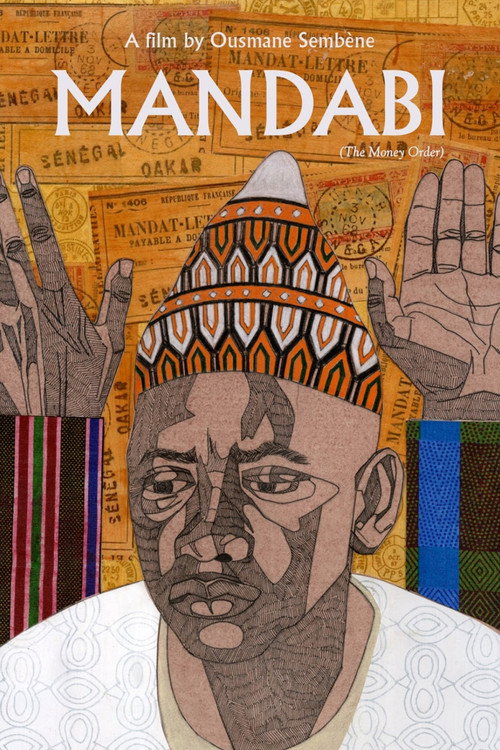
Mandabi 1968
Mandabi (1968), the groundbreaking comedy-drama from Senegalese cinema legend Ousmane Sembène, dissects the humiliating grind of bureaucracy and the erosion of tradition when a simple money order from Paris upends a family's fragile stability.
Director: Ousmane Sembène
Cast



Frequently Asked Questions
What is Mandabi (1968) about?
When a money order from Paris arrives for a Senegalese family man, it triggers a chain reaction of bureaucratic nightmares, family betrayals, and moral dilemmas. What starts as a financial lifeline becomes a brutal test of patience and principle as he fights to access his own funds in a system stacked against him.
Who directed Mandabi?
Mandabi was directed by Ousmane Sembène, the pioneering Senegalese filmmaker and writer whose work gave voice to African storytelling on the global stage.
Who stars in Mandabi?
The film features Makhouredia Gueye in the lead role, alongside Younousse Sèye, Isseu Niang, and Mustapha Ture, bringing depth and authenticity to Sembène's sharp social satire.
Is Mandabi (1968) worth watching?
As a foundational work of African cinema, Mandabi (1968) is absolutely worth watching for its historical significance, biting wit, and poignant themes. While unrated on IMDb, its reputation as a masterpiece of satire and social realism speaks volumes—especially for fans of character-driven drama with a political edge.
How long is Mandabi?
Mandabi runs for 92 minutes, delivering a concise yet impactful story that packs layers of meaning into just over an hour and a half.
🎥 Trailer
About Mandabi (1968) — How a Money Order Unravels a Senegalese Family's Dreams
Mandabi (1968), the groundbreaking comedy-drama from Senegalese cinema legend Ousmane Sembène, dissects the humiliating grind of bureaucracy and the erosion of tradition when a simple money order from Paris upends a family's fragile stability. At its heart is Ibrahima Dieng, a proud but struggling father who becomes ensnared in a Kafkaesque maze of red tape, greed, and petty corruption just to cash a meager remittance. As he navigates the suffocating demands of local officials, scheming relatives, and a rapidly modernizing Dakar, the film reveals the quiet tragedies and fragile hopes of post-colonial Africa. Sembène's razor-sharp satire blends biting social commentary with dry humor, painting a portrait of resilience and dignity in the face of indignity.
Often hailed as one of the first African films to achieve international acclaim, *Mandabi* is both a cultural milestone and a timeless exploration of human endurance. The director's masterful use of humor and pathos transforms an everyday struggle into a universal story about dignity, identity, and the cost of progress. With its stark realism and unflinching gaze, the film lingers long after its final frame, challenging viewers to reflect on the systems that shape our lives—and the quiet heroism of those who refuse to be broken by them.