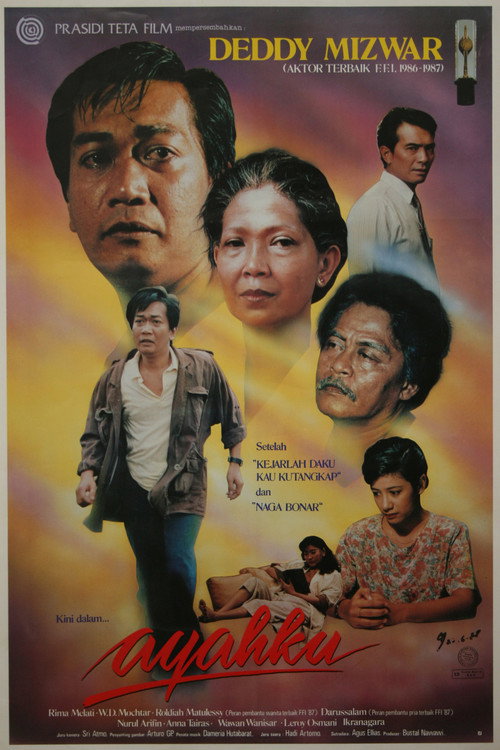
Ayahku 1987
A father's sudden departure leaves his wife and three children to fend for themselves, forcing the eldest son to step up as the family's backbone.
Director: Agus Ellyas
Cast








Frequently Asked Questions
What is Ayahku (1987) about?
Ayahku follows a man who abandons his wife and three children, leaving the eldest son to raise the family. Years later, he tries to return, only to face rejection from his own children, who have built their lives without him.
Who directed Ayahku?
Agus Ellyas directed Ayahku, bringing a deeply personal touch to this family drama.
Who stars in Ayahku?
The film features W.D. Mochtar, Rima Melati, Deddy Mizwar, Wawan Wanisar, and Nurul Arifin in pivotal roles.
Is Ayahku (1987) worth watching?
While it lacks an IMDb rating, Ayahku stands out as a compelling drama about family and redemption, especially for fans of Indonesian cinema. Its themes of regret and reconciliation resonate universally, making it a thought-provoking watch.
How long is Ayahku?
Ayahku runs for 102 minutes.
About Ayahku (1987) — A Father's Absence and the Family Left Behind
A father's sudden departure leaves his wife and three children to fend for themselves, forcing the eldest son to step up as the family's backbone. Years later, the patriarch attempts to return, burdened with regret and the hope of reconciliation, but his past decisions have already reshaped lives in ways he can't undo. *Ayahku (1987)*, directed by Agus Ellyas, weaves a poignant drama about fractured bonds, the weight of responsibility, and whether forgiveness can mend years of absence.
Set against the backdrop of 1980s Indonesia, the film explores the emotional toll of abandonment through raw performances by W.D. Mochtar, Rima Melati, and Deddy Mizwar. The story unfolds with quiet intensity, capturing the duality of longing and resentment as the family grapples with the absence of a parent who may never truly belong again.