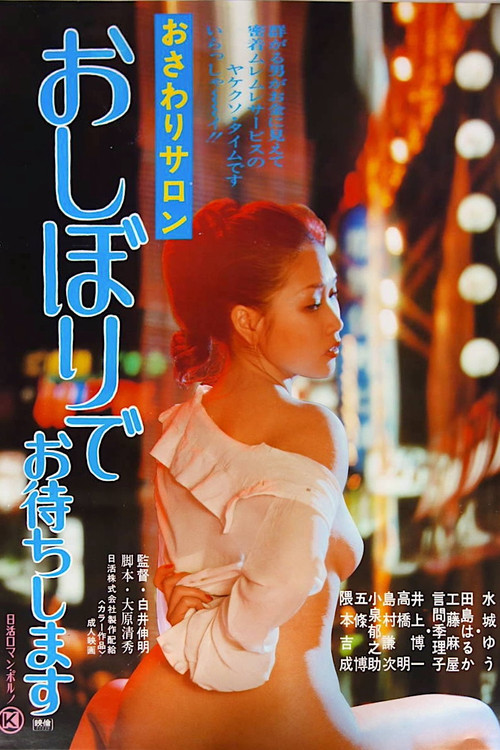
Pink Salon: 'We're Waiting for You with Tissue Paper' 1977
In *Pink Salon: 'We're Waiting for You with Tissue Paper'* (1977), director Nobuaki Shirai crafts a poignant drama set against the neon-lit streets of Tokyo.
Director: Nobuaki Shirai
Cast
Frequently Asked Questions
What is Pink Salon: 'We're Waiting for You with Tissue Paper' (1977) about?
The film centers on a determined single mother who works at a massage parlor to save money for her daughter's future. Set in Tokyo's underbelly, it's a heartfelt exploration of sacrifice and resilience amid societal pressures.
Who directed Pink Salon: 'We're Waiting for You with Tissue Paper'?
Nobuaki Shirai directed this 1977 drama, known for his evocative storytelling and realistic portrayal of urban life.
Who stars in Pink Salon: 'We're Waiting for You with Tissue Paper'?
The film features Yu Mizuki in the lead role, with supporting performances from Haruka Tajima, Hiroshi Gojo, Hirokazu Inoue, and Shûji Kagawa.
Is Pink Salon: 'We're Waiting for You with Tissue Paper' (1977) worth watching?
While unrated and niche, its emotional depth and social themes make it a compelling watch for fans of 1970s Japanese cinema. The short runtime and raw performances add to its appeal, though it may not suit all tastes.
How long is Pink Salon: 'We're Waiting for You with Tissue Paper'?
The film runs for 70 minutes.
About Pink Salon: 'We're Waiting for You with Tissue Paper' (1977) — The untold story behind the 1970s Japanese drama
In *Pink Salon: 'We're Waiting for You with Tissue Paper'* (1977), director Nobuaki Shirai crafts a poignant drama set against the neon-lit streets of Tokyo. The film follows a single mother, played by Yu Mizuki, who works at a massage parlor to scrape together enough money for her daughter's future. Shot on location with a raw, unfiltered lens, the movie immerses viewers in the gritty yet tender struggles of its protagonist, blending social realism with emotional depth. With its subdued palette and understated performances, the film evokes a quiet melancholy, exploring themes of sacrifice, resilience, and the quiet heroism found in everyday struggles.
The short runtime—just 70 minutes—doesn't dilute its impact; instead, it sharpens the focus on the protagonist's journey. Haruka Tajima and Hiroshi Gojo round out the key cast, adding layers to the story with their nuanced portrayals. While the genre isn't explicitly labeled, the film's intimate character study and social commentary place it firmly in the realm of dramatic realism. A hidden gem of 1970s Japanese cinema, it's a story that lingers long after the credits roll.